

Discussion
- Wednesday, 21. October 2015 1:00 pm – 2:30 pm Save in my calendar
Ayotzinapa and beyond
How do the Mexican government and the European Union act on enforced disappearances in Mexico
International Human Rights Mechanisms have recently expressed the grave human rights crisis that Mexico is facing. In particular, the UN Committee on enforced disappearances concluded that this practice occurs widespread in that country. The lack of domestic law, a nationwide definition of this crime and a uniform register of disappeared people are some of the shortcomings identified that Mexico should tackle by implementing the recommendations received on this regard.
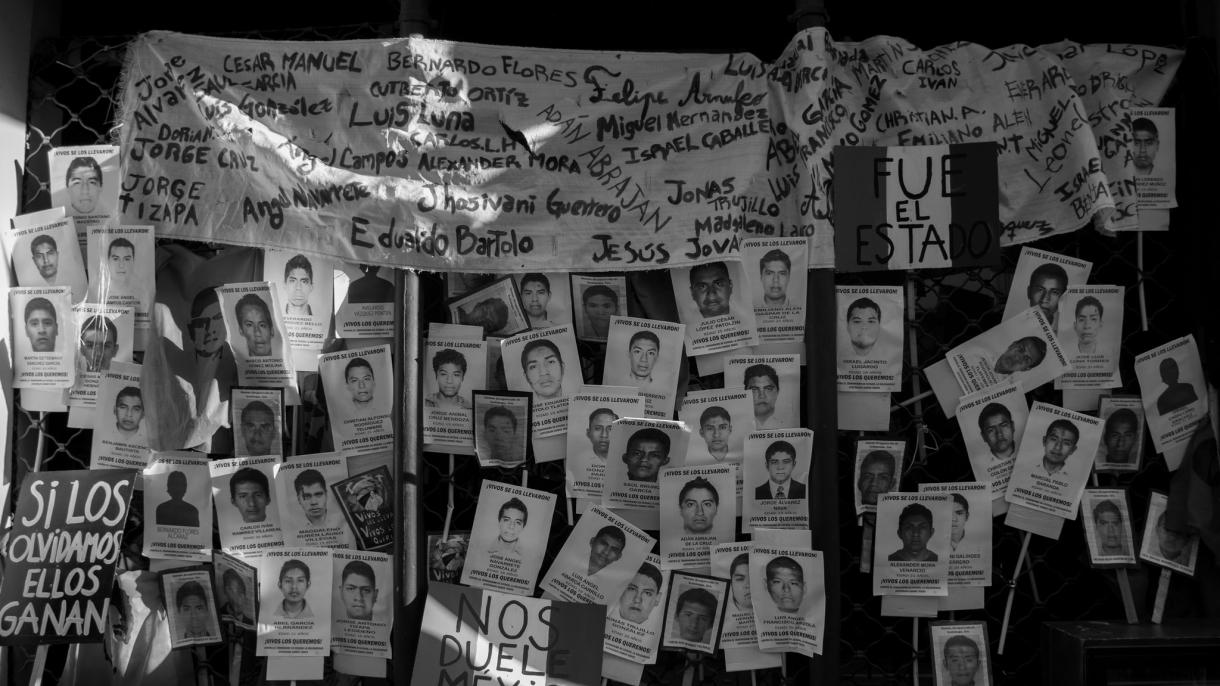
Although enforced disappearance has meanwhile been defined as a crime in 23 out of 32 federal states, there was sentencing in only 6 cases between 2006 and 2013. The enforced disappearance of 43 prospective teachers in Iguala (Federal State of Guerrero) on September 26th 2014 – also known as the “Ayotzinapa case” - evoked a wave of protest in the Mexican population demanding an end of impunity, corruption and the complicity between State authorities and organized crime. On September 6th 2015, the GIEI (“Grupo Interdisciplinario de Expertos Independientes”), mandated by the Inter-American Human Rights Commission, published a report that proves the massive lacks in the investigation and the inconsistency of the version in force of the sequence of the events.
During the Lunch debate, we want to discuss the European Union´s positions: What are the shortcomings that prevent the Mexican State from fulfilling its international obligations to investigate enforced disappearances and to punish the perpetrators? How is the EU planning to tackle the problem of enforced disappearances in Mexico?
Speakers
Aldo dell'Ariccia, Head of Division, EEAS, Mexico and CA Department
Estefanía Torres Martínez, Member of the EU-Mexico Joint Parliamentary Committee
Alejandra Nuño, CEDEHM, Centro de Derechos Humanos de las Mujeres, Chihuahua
Vidulfo Rosales, CDH de la Montaña Tlachinollan, Guerrero
Moderator
Patricia Jiménez, Director Global Dialogue Programme, Heinrich-Böll-Stiftung, EU Office
Files
- Address
-
➽ See event description