
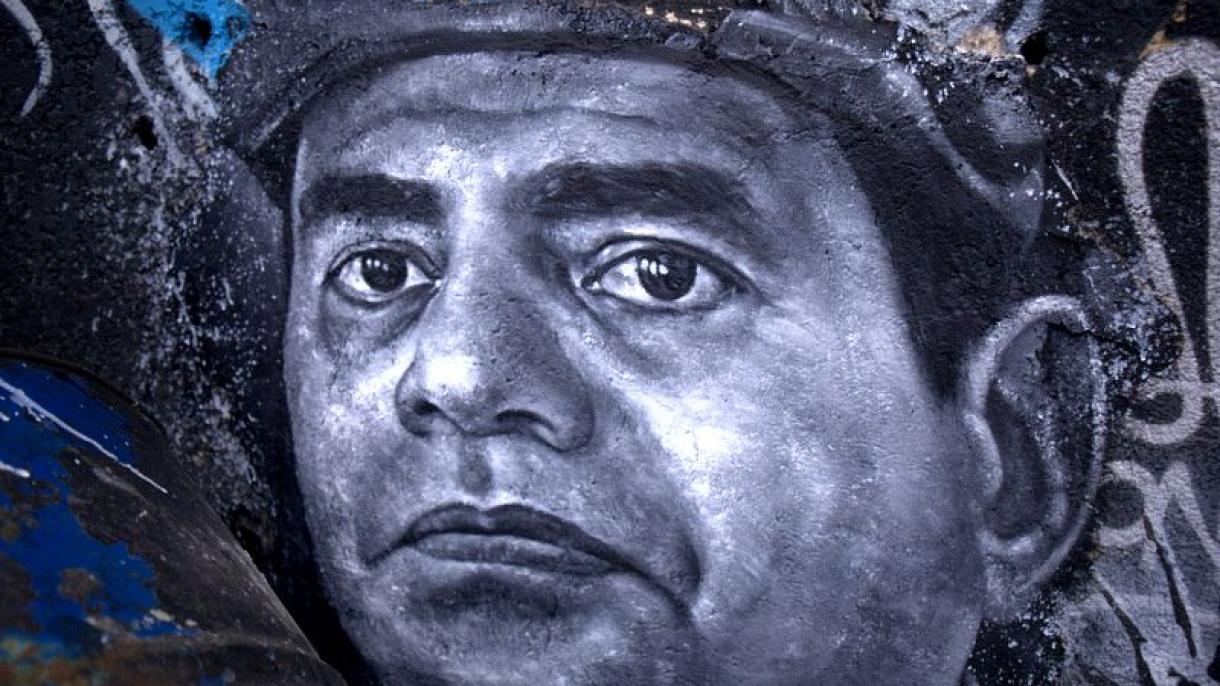
 This image is licensed under Creative Commons License.
- Wednesday, 15. June 2016 12:30 pm – 2:30 pm Save in my calendar
Egypt under Sisi, Causes of Instability
Egypt is becoming increasingly unstable under President Sisi. Two years after his election, the President did not deliver on his promises. Instead, the country is plagued by extreme human rights violations, politically motivated arrests and an unprecedented crack down on civil society and political opposition. Furthermore, political radicalization is on the rise, a tense security situation is hitting hard Egypt’s tourism industry and mega economic projects will not provide quick wins for the general population. A sense of frustration and disappointment cumulated recently in public protest and criticism of the president’s policies.
On March 10th, 2016, the European Parliament (EP) passed a resolution condemning the enforced disappearance, torture and murder of the Italian researcher Giulio Regeni, and highlighting that the case follows a long list of enforced disappearances in Egypt.
Already in August 2013, the Foreign Affairs Council (FAC) Conclusions on Egypt urged all political parties in the country to engage in an inclusive dialogue in order to restore a democratic process and agreed to suspend export of any arms or equipment which might be used for internal repression. However, according to Amnesty International, 12 out of 28 member states are among the main suppliers of military and policing equipment to Egypt.
The adoption of the anti-terror law and other legislation has drastically restricted freedom of expression, association and peaceful assembly. Peaceful opposition leaders, pro-democracy activists, human rights activists, journalists and civil society leaders have been banned from travelling outside Egypt, threatened, harassed, detained or imprisoned. Moreover, Egyptian human rights NGOs are under investigation for receiving foreign funding in ongoing case number 173.
Do EU member states view Egypt with its current political system as a key provider of regional security and stability in North Africa and the Middle East? Isn’t the current EU and EU Member states policy with Egypt not only contradicting the EU’s political and judicial foreign policy standards but also its main objective, to create stability and avoid the failure of another state in the region?
Date: Wednesday, 15th of June 2016, 12.30 – 14.30 (light lunch from 12:30 to 13:00)
Venue: Will be communicated after registration
Speakers:
- Issandr Amrani, Political analyst, Crisis Group's North Africa Project
- David Nichols, Senior Executive Officer, EU Foreign Policy, Amnesty International
- Christian Berger*, MENA Deputy Managing Director, EEAS
- Barbara Lochbihler, MEP, Vice-Chair of the Subcommittee on Human Rights
Moderators: Klaus Linsenmeier, Director of Heinrich-Böll-Stiftung, EU Office & Joachim Paul, Director of Heinrich-Böll-Stiftung Office North Africa, Tunis
The meeting is held under Chatham House Rule. No admittance without confirmed registration. E-mail registration only. Please send the attached reply form to: Teresa.Oberhauser@eu.boell.org
*to be confirmed
- Part of the series
- Böll Lunch Debate