
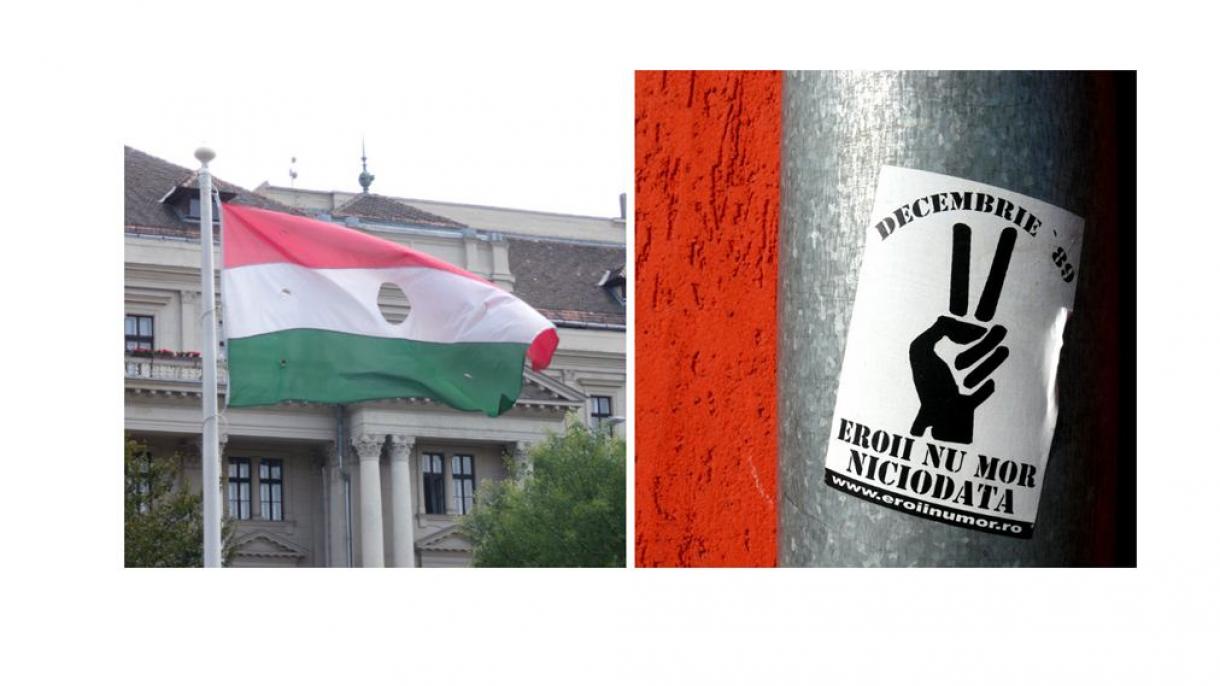
 This image is licensed under Creative Commons License.
- Wednesday, December 3, 2014 1:00 pm – 2:30 pm Save in my calendar
Hungary, Romania 1989-2014: Problem Children of the Revolution
This event is fully booked
In the eyes of most West Europeans Hungary was the model pupil among the ex-communist EU candidate countries. In 1956 the Hungarians had revolted against communist rule and paid a high price for it. In 1989 Hungary played a crucial role in the collapse of communism in central and eastern Europe when it removed its barbed wire fence with Austria in May allowing East Germans to escape to West Germany through Austria. It was the only Eastern Bloc country that managed political transformation by means of an evolutionary process, with the former communist party (re-inventing itself as Hungarian Socialist Party) playing the key role. In 2003 83% of the Hungarian voters said ‘yes’ to the European Union. But 25 years after the peaceful revolution and ten years after EU accession Hungary has turned from model pupil to problem child causing many critical voices to even ask for Hungary’s exclusion from the EU. Romania had a far more difficult road to follow. For a long time the West had mistaken Communist leader Nicolae Ceaușescu for a “reformer“, decorated and pampered him and gladly did business with him turning a blind eye to the extent of oppression and corruption which characterised his regime. Romania’s revolution in December 1989 was the only violent one of the 1989 popular uprisings. Western Europeans could watch it on television including the execution of Nicolae Ceaușescu and his wife Elena on Christmas Day. More than 1000 people died in the wake of the revolution. What followed was often confusing and chaotic. Romania together with its neighbour Bulgaria had to wait till 2007 to join the EU, with many critics claiming that it was still way too early. In the seven years after its accession Romania went through political, constitutional and economic crises providing little hope to its exhausted people. Romania and Hungary: different countries, different histories, different roads travelled, but the questions to be asked are the same: where did things go wrong, what is it the EU could have done differently and what needs to be done to keep both countries on the right track and offer a positive perspective to the people?
Speakers
Dr Claudiu Craciun, lecturer in European Politics at the Faculty of Political Science, National School of Political Studies and Administration in Bucharest
Mariann Dosa, DPhil candidate in Comparative Social Policy, University of Oxford and former mentor for the Roma Settlement Elimination Programme of the Hungarian Ministry of Social Affairs and Labour
Rui Tavares, historian, former Member of the European Parliament and rapporteur on fundamental rights, democracy and the rule of law in Hungary
Moderator
Bastian Hermisson, director Heinrich-Böll-Stiftung European Union
In our web dossier 2014: A European Year of Remembrance you will find an essay on Hungary written by Krisztián Ungváry. A contribution by Claudiu Craciun on Romania can be found here. An earlier essay by the author is available, too.