
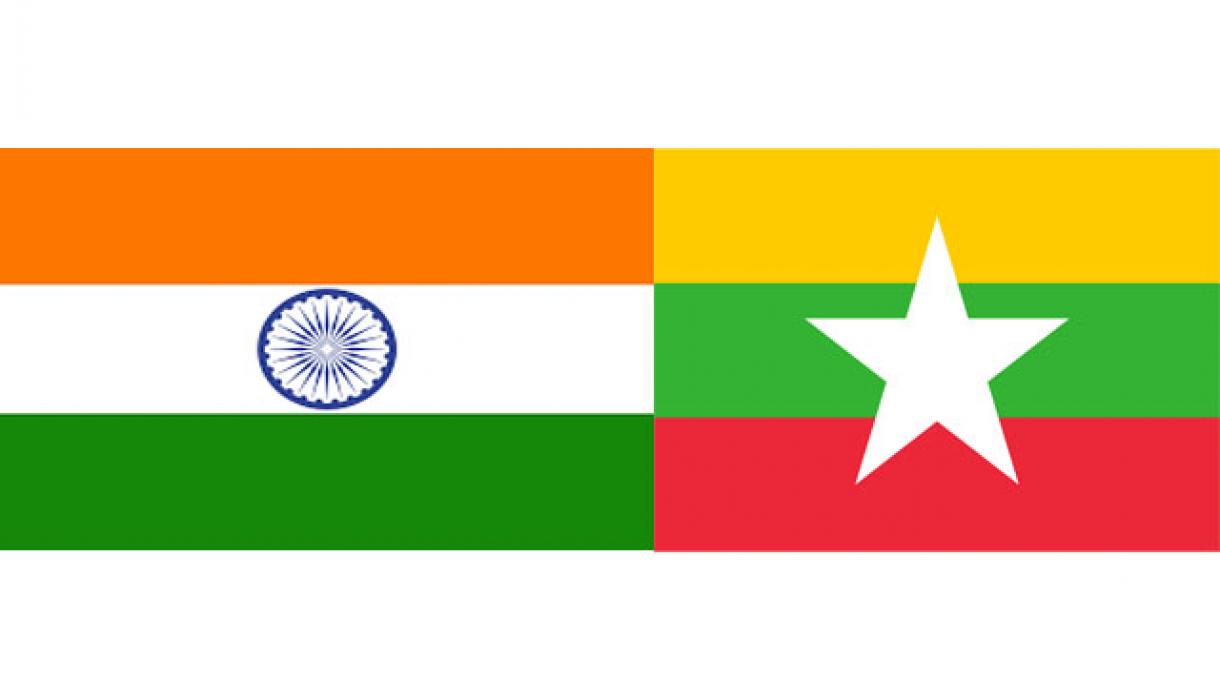
 This image is licensed under Creative Commons License.
- Wednesday, 20. April 2016 – Thursday, 21. April 2016 Save in my calendar
India-Myanmar Media Dialogue
Myanmar is riding the wave of noticeable reform having embarked on an unprecedented opening up and reform process in 2011. Myanmar’s political opening has not only created significant external expectations but also raised hopes both in Myanmar and neighbouring India for greater democratization, economic development and media freedom. The change in Myanmar’s media landscape has been far reaching. The newspaper industry has been liberalised, a string of new radio stations has opened and the mobile and internet revolution has brought about a dramatic change. People today have far greater access to information than ever before. There has been an explosion in the availability of information across multiple media formats.
The return of the exiled media groups such as Mizzima, the Irrawaddy, the Democratic Voice of Burma and the ethnic media umbrella group Burmese News International has added to the plurality and sustainability of the media in Myanmar. But the process is far from complete. Having fed on a restricted diet of state-sponsored half-truths, the people in large parts of the country have little media literacy. Besides, the media still works under certain constraints.
Media plays a critical role in post-conflict societies. Hence its independence is vital. The media coverage of Myanmar in India too is not without problems. It is patchy, episodic and often superficial. While certain part of the coverage reflects uncritical and often unabashed Indian government's position, especially the ones focussing on high-level economic, military and strategic co-operation, the fact remains that both the national and regional media ignore issues of governance, deepening of democracy, promotion of human rights, refugee issue and the complexities of ethnic and religious minorities.
In large parts of India the awareness about real change in Myanmar is limited. Even journalists based in India’s north-eastern states are not very knowledgeable about many complex issues in Myanmar. The coverage in the Indian media is primarily about political and economic change, not so much about issues surrounding ethnicity, minorities and the level of poverty and marginalisation. There is still insufficient media reporting and public awareness in India about Myanmar. There is also inclination among the political class to see foreigners and ethnic minorities as a threat to national interests.
However, given India’s democratic track record and the credibility the media enjoys, there is a lot of expectation in Myanmar that there is a lot to learn from the experiences of the diverse Indian media.
Today, media in Myanmar is only slowly opening up and the boundaries of free press are being tested by trial and error. How far the media can confront the government is a moot point. As of now Myanmar media persons are usually conforming to the unwritten rules that persist even without state censorship. The media in India is far less restricted and is not perceived as intimidated by the state authorities.
The newly obtained space for the media is an encouraging development; however the training opportunities for media persons remain low: journalists for example lack awareness about safety measures to protect themselves in “the field.” There is also need to learn how to report responsibly. They also lack knowledge about safety measures while reporting from conflict areas.
Journalists in Myanmar are not allowed to access courts or interview the police without official permission. Critical analysis of and expressed opinion about the government’s performance is still not welcome. Parliamentary proceedings are not broadcast live, but get published only after being edited. Facebook has not seen many restrictions, although there have been a few examples of arrests in the past.
Reporting from the conflict areas, political reporting, election coverage, issues in the border regions require professional handling. Closer media interactions among Border States and regions would be extremely useful for both the countries.
Independent media is an effective tool for resolving problems and achieving social change. The Myanmar media persons lack the requisite training and exposure. Most journalists are young and inexperienced. The capacity gap is even sharper in terms of regional and language media. India-Myanmar media partnership particularly meaningful interactions with the media in India’s north-eastern states would go a long way to advance media professionals in Myanmar.
In view of the above, this India-Myanmar Media Dialogue aims to bring Indian media and Myanmar media under a common platform so as to promote greater understanding of the issues in India-Myanmar relations.
The objectives of the two-day workshop revolve as much around media’s role, its training and capacity development as the need to increase greater awareness about each other’s countries and their problems. The media serves as a barometer of progress in a democratic society.
1. This media dialogue will help the Myanmar media persons and media organisations to become more vibrant and professional. Media has its own professional responsibilities. A meaningful interaction will lead to capacity development and partnership.
2. The role of media in post-conflict society is vital. In fact, the very practice of good professional journalism is itself a form of conflict resolution. In a newly democratic country like Myanmar, reliable and accurate information is crucial. This is where there will be a lot of learning from India’s best practices.
3. To improve the possibilities of Myanmar media based in border area and ethnic states to place their content in Indian media.
4. To improve co-operation between the Indian journalists and Myanmar media for a better representation on all the important agendas of India-Myanmar relations.
A two-day India-Myanmar Media Dialogue will be held in Shillong on 20-21 April 2016, organized by Heinrich Böll Foundation, Institute of Social Sciences, Burma Centre Delhi and Asian Confluence, Shillong.
--------------------------------------------------------------
Information:
Chok Tsering
Program Co-ordinator, Democracy & Dialogue Programme
E: chok.tsering@in.boell.org
Files
- Organizer
- External Event