Discussion
- Wednesday, 22. April 2026 5:30 pm – 7:00 pm Save in my calendar
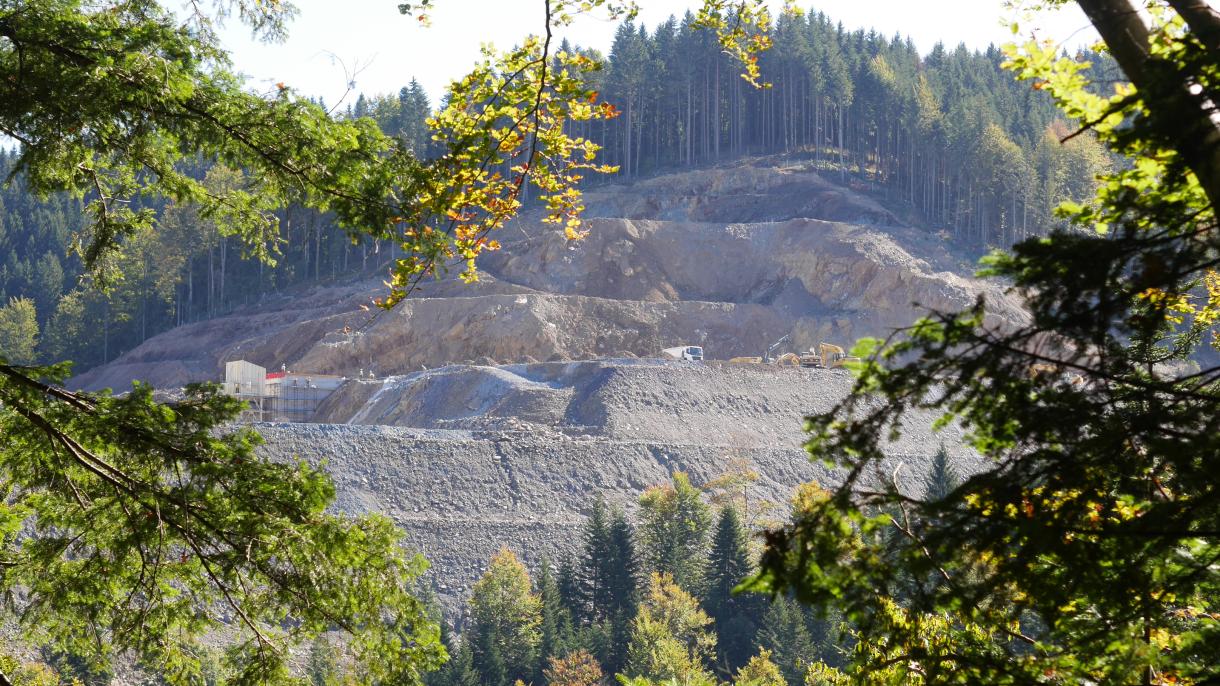
Mining in the Western Balkans
The EU's resource race vs governance realities
Critical raw materials (CRM) seem central to the EU’s green, digital, and defence transitions but remain in short supply. To reduce dependencies, the European Commission launched the Critical Raw Materials Act in 2024, bringing the mineral-rich Western Balkans into sharper focus. With lithium and copper in Serbia and Bosnia and Hercegovina, and nickel, aluminium and rare earths across the region, the EU increasingly regards the region as a “near-shore” supplier, both geographically and as European partners.
The poor governance often seen in the six EU candidate countries does not seem to be affecting the EU’s investment plans. However, EU representatives have yet to provide the local population with a clear answer how legal frameworks and environmental standards will be upheld during the implementation of large-scale mining projects, in state captured context.
There are fears locally that democratization and environmental resources will be sold out. Massive protests are directed against environmental damage, corruption. democratic setbacks and limited public participation. The EU’s partnership with Serbia on lithium mining in the Jadar Valley sparked strong criticism from civil society. Similar tensions are emerging across the region, for instance in Bosnia and Herzegovina numerous mining projects are planned.
With the authors and experts of the recent publication Mining in the Western Balkans: How to counter authoritarian extractivism? by BiEPAG, with political representatives and activists we want to discuss
Which mining can be considered responsible, socially, environmentally, and politically? In what ways can the EU balance its raw material interests with a reform-oriented enlargement process and at the same time strengthen governance and the rule of law in the Western Balkans? How can environmental standards and local community participation and interest be safeguarded?
Introduction EU policies on CRM
- Johanna Sydow, head of International Environmental Policy Division, Heinrich Böll Foundation Berlin
Panel
- Azra Berbić, Deputy Director, Foundation Atelier for Community Transformation ACT, Sarajevo and activist, Sarajevo
- Boris Mijatovic, Alliance 90/The Greens, member of parliament, Berlin
- Jovan Rajić, Founder/President of the Board, RERI, Belgrad
- Marko Kmezić, Senior Researcher at the Centre for Southeast European Studies at the University of Graz, member of BiEPAG
Moderation: Katja Giebel, Senior program officer, Heinrich Boell Foundation Berlin
The discussion will be held in English.
After the session, join us for informal networking with snacks and drinks.
A cooperation with BiEPAG and SWP, with friendly support of EFB and Mercator Stiftung
Contact
Katja Giebel
Heinrich Boell Foundation Berlin
E giebel@boell.de
Your Participation in the event
» Participation on site
at the the Heinrich-Böll-Stiftung Conference Center, Schumannstr. 8, 10117 Berlin
Please register in advance. Unfortunately, the number of seats for this event are limited.
» Livestream
Alternatively, you can follow the event via livestream without registering.
Livestream in English
» Towards Greater Accessibility
At the Heinrich Böll Foundation, we are constantly striving to remove barriers. Whether in our building, in the release of publications or at online events. All information on this can be found under the following link: https://www.boell.de/de/auf-dem-weg-zur-barrierefreiheit
- Address
-
▶ Heinrich-Böll-Stiftung, Headquarters Berlin and Online
- Accessibility
- Language
- English
- Livestream
- Watch livestream
Cooperation Partner