
Panel discussion
- Tuesday, September 29, 2026 7:00 pm – 8:30 pm Save in my calendar
Connectivity or Naivety: What Role for the EU in the South Caucasus?
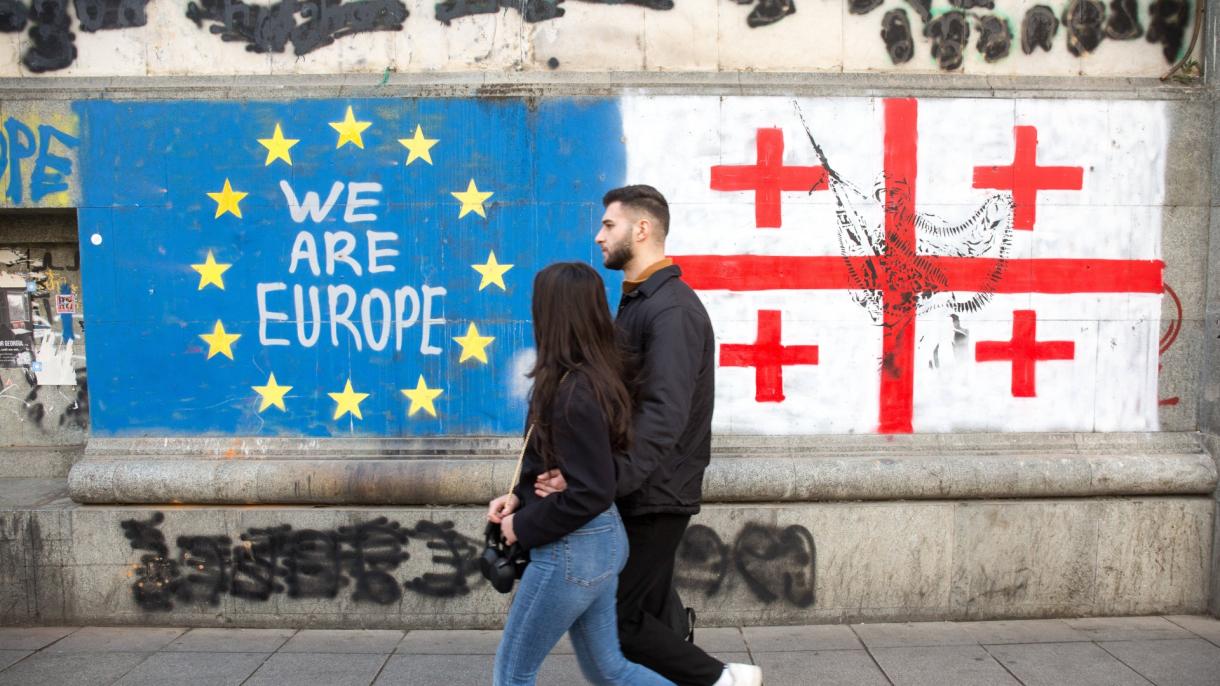
The South Caucasus is experiencing profound political change. While Georgia became an EU candidate country in 2023, it has simultaneously taken an increasingly illiberal, anti-European course, and turned into a ‘moderate autocracy.’ Armenia has begun to diversify away from Russia, strengthened ties with the EU, and made significant progress toward normalizing relations with Azerbaijan and Turkey, despite ongoing concerns about democratic backsliding. Meanwhile, Azerbaijan remains firmly authoritarian under President Aliyev, with hundreds of political prisoners.
A major regional breakthrough came in August 2025, when Armenia and Azerbaijan initialed the Agreement on Peace and Establishment of Interstate Relations and signed a declaration announcing the “Trump Route for International Peace and Prosperity”, opening new prospects for trade and connectivity between Azerbaijan, Armenia, and Turkey. At the same time, Turkey, Russia, the United States, and the EU are all seeking to shape the region according to their own strategic interests.
Against this backdrop, many in the South Caucasus perceive the EU’s response as weak – they criticize it either for prioritising geopolitical pragmatism over democratic values, or for failing to become a genuine geopolitical actor capable of going beyond technical assistance. Other – authoritarian – actors appear to be pursuing their interests and strategies in the region with far greater determination.
Some of these developments are explored in Sonja Schiffers' book “Authoritarian and Illiberal Influence: Russia's and Turkey's Threats to Democracy in Wider Europe” (Bloomsbury, March 2026). After a short presentation of its main findings by the author we will discuss questions such as:
- How has the political landscape of the South Caucasus changed in recent years?
- What are the competing objectives of regional and international powers?
- What are the opportunities and limits of German and EU engagement?
- What can be done to effectively counter the consequences of authoritarian trends for the civil societies affected?
Welcome remarks
- Jan Philipp Albrecht, Co-president, Heinrich Böll Foundation Berlin
Input
"Authoritarian and Illiberal Influence: Russia's and Turkey's Threats to Democracy in Wider Europe"
- Sonja Schiffers, Director, Heinrich Böll Foundation Tbilisi, book author
Discussion
- Tamta Mikeladze, Social Justice Center, Tbilisi, Georgia
- Mikayel Zolyan, analyst and former Member of the Armenian National Assembly, Yerevan, Armenia
- Robin Wagener, MP, Special rapporteur on Eastern Europe for the parliamentary Group of Alliance 90/The Greens
- Sonja Schiffers, Director, Heinrich Böll Foundation, Tbilisi Office
Chair
- Walter Kaufmann, Heinrich Böll Foundation, Berlin
The discussion will be held in English and German with simultaneous translation.
Information
Irina Ghulinyan-Gerz
Division East and Sout East Europe
Heinrich-Böll-Stiftung Berlin
E Irina.Ghulinyan-Gerz@boell.de
- Timezone
- MESZ
- Address
-
▶ Heinrich-Böll-Stiftung, Headquarters Berlin and Online
- Accessibility
- Language
- German
- English
- Livestream
- Watch livestream
Your participation in the event
On-site participation at the Heinrich Böll Foundation Conference Centre, Schumannstr. 8, 10117 Berlin
Please register. Unfortunately, the number of places is limited. If the room capacity is exhausted, we will broadcast the event via video to other rooms. Please note that there is no guarantee of a place in the hall.
Accessing our building
- The entrance to our building is wheelchair-friendly.
- The front entrance is equipped with an accessible intercom system.
- A parking spot for disabled persons can be provided upon request.
- Our event space is on the first floor (US: second floor).
- The building is equipped with an elevator.
- Accessible toilets / bathrooms are available on the ground floor level.
Wheelchair spaces
In our event spaces we provide dedicated spots for wheelchair users.
All tables come with a wheelchair clearance.
For further questions please contact our event staff.
Further information on accessibility can be found here.
Alternatively, you can follow the event via livestream without registering.
Livestream in English
Livestream in German