
 This image is licensed under Creative Commons License.
Expert talk
- Wednesday, 30. April 2025 10:30 am – 12:30 pm Save in my calendar
The Extraction of Rare Earths in Myanmar
Critical Raw Materials for Electric Cars and Wind Turbines
Rare earth plays a key role in the current global race for critical raw materials. Illustrating their geopolitical significance, rare earth metals have made the headlines lately regarding a possible minerals deal between the US and Ukraine. Moreover, wind turbine and electric vehicle sectors are particularly dependent on rare earth elements, putting their use at the center of discussions on the green energy transition.
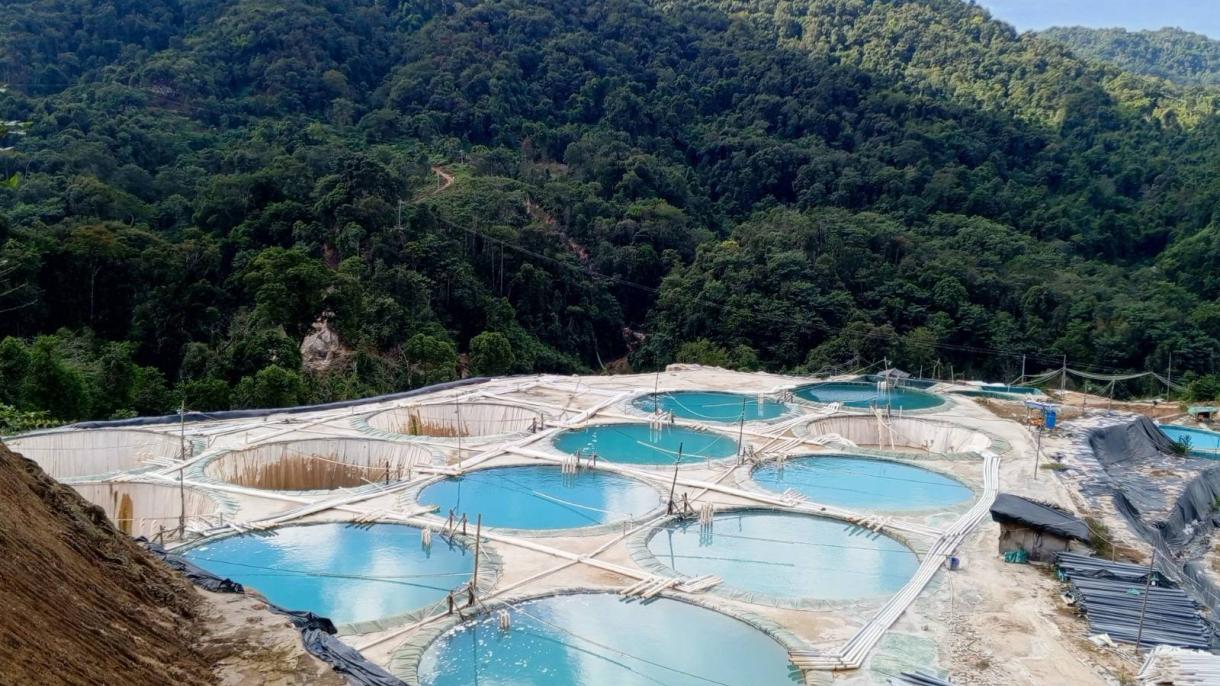
The mining often has devastating impacts: Largely unknown in Germany, the Asian country of Myanmar produces the world's largest annual supply of two heavy earths. From Myanmar the raw materials are exported to China, where they processed, and used in global production including by German companies.
The risks associated with rare earth extraction in Myanmar are immense. Since a military coup in 2021, the country has been under the partial control of a military dictatorship. Most mining sites are located in Kachin State, where fighting between the military junta and ethnic armed organisations makes it nearly impossible to uphold human and labor rights in the extraction process. Mining is largely unregulated and often carried out using illegal methods, leading to severe environmental damage, including water pollution and soil contamination.
Although challenging, options do exist to address these problems. Companies and policymakers in the European Union, and particularly Germany, which has a strong demand for these minerals, have a large responsibility to promote responsible mining throughout the supply chain.
This closed expert discussion, based on two studies commissioned by the Heinrich Böll Stiftung and with guests from Myanmar’s civil society, aims to facilitate an exchange with stakeholders from industry, politics, and civil society in Germany. The goal is to develop concrete approaches and recommendations for improving the current situation.
With inputs from:
- Hkaw Lwi, Representative of the Kachin Resource Concern Group (KRCG)
- Michael Seng Li, Director of the Shanan Foundation, Kachin State, Myanmar
- Susanne Kempel, Consultant, Global Witness
Closed expert discussion (Chatham House Rules, participation by invitation only)
Contact:
Mia Kruska, miakruska@boell.de
Your Participation in the event
» Participation on site
at the the Heinrich-Böll-Stiftung Conference Center, Schumannstr. 8, 10117 Berlin
Please register in advance. Unfortunately, the number of seats for this event are limited. If we are at capacity, the conversation will be transmitted via video to other rooms.
- Address
-
Heinrich-Böll-Stiftung - Headquarter Berlin
Schumannstr. 8
10117 Berlin
- Accessibility
- Language
- English