
- Samstag, 03. Dezember 2016 09.30 – 17.00 Uhr In meinem Kalender speichern
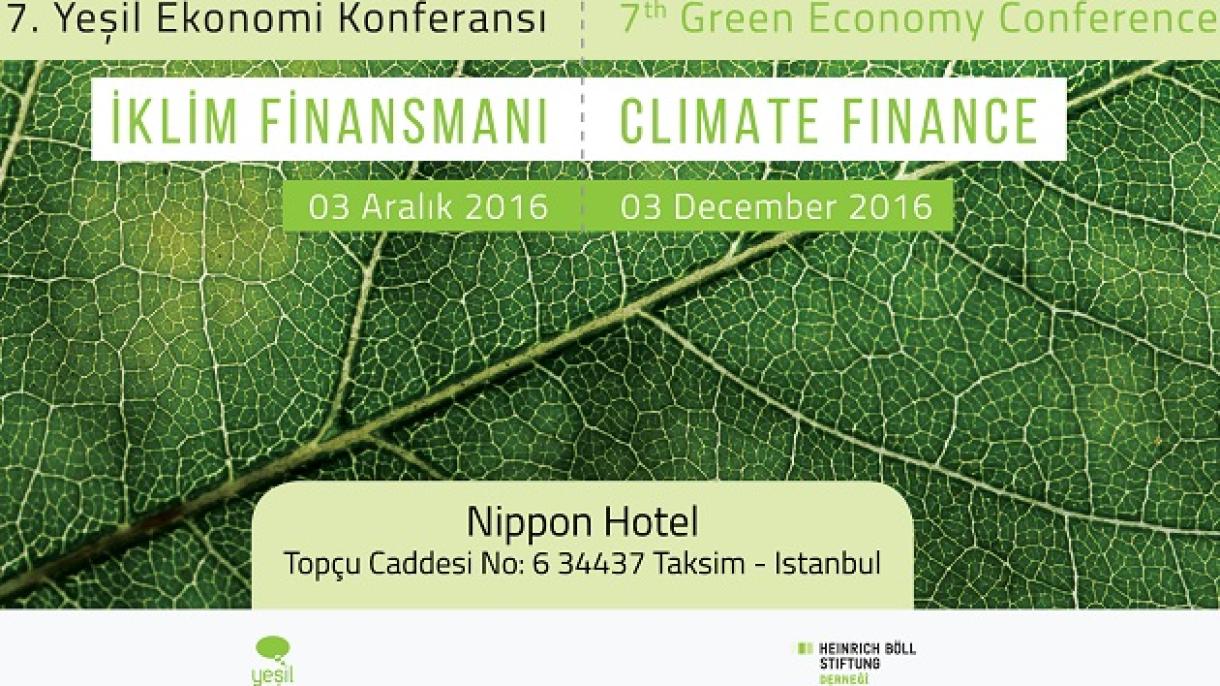
7th. Green Economy Conference; Climate Finance
Can Climate Finance be Transformative?
While a universal definition of climate finance is missing, it is generally understood under the UN Framework Convention on Climate Change (UNFCCC) as financial transfers from the developed countries to developing countries to support mitigation of emissions and adaptation to climate change by enabling a transition to low-carbon and climate-resilient economic growth and development with the support of energy technology transfer and capacity building. Climate finance is supplied for projects and programs through specific financing mechanisms by bilateral or international agencies. Under the UNFCCC (1992), Annex II developed country parties are obligated to provide new and additional financial contributions for mitigation of an adaptation to climate change. These financial flows, however, are only a small part of the overall climate finance picture, which also includes private sector investments as well as mobilized domestic resources. And while important, the total of climate finance mobilized and provided remains woefully inadequate to fulfil developing countries’ financing needs.
There is a variety of sources for climate finance delivery such as governments (in both developed and developing countries), public and private financial intermediaries, including public multilateral development banks and private commercial banks, other public sector entities, including bilateral development aid agencies, but also non-governmental organizations, and the business sector more broadly. Under the UNFCCC, the convention’s financial mechanism recognizes two key operating entities, namely the Global Environment Facility (GEF) and the new Green Climate Fund (GCF). The latter was established under the UNFCCC framework only in 2010 and has only recently started to provide funding to developed countries. With USD 10.3 billion pledged contribution; it is now the largest multilateral climate fund with a commitment to a balanced allocation for adaptation and mitigation funding. Governed by a board of 24 members and with an independent Secretariat located in Songdo/South Korea, the GCF is the intended primary delivery chancel for developed countries’ commitment to raise USD 100 billion per year by 2020 in new and additional climate finance and the financial cornerstone for implementing the Paris Agreement.
At the 7th Green Economy Conference we will look at the realities and needs of climate finance for the Turkish context and try to address some of the following questions:
What role does climate finance play in countering climate change? Who are the beneficiaries of existing the climate funds? How accessible are the climate finance mechanisms to countries and communities? How should mechanisms of climate finance be governed to ensure a fair and climate-just distribution of funding? How can the MRV (monitoring, reporting and verification) of climate finance flows be improved? What role does the private sector play in climate finance mobilization and delivery? What kind of clean technology and programmes should be financed? What kind of local climate finance mechanisms can be used within the country?
We kindly invite you to join us for a one-day conference to build capacity and share perspectives on climate finance as part of our Green Economy Conference series.
There will be simultaneous translation in Turkish – English during the conference.
Heinrich Böll Stiftung Turkey Representation and Green Thought Association
- Veranstalter*in
- Heinrich-Böll-Stiftung Istanbul - Türkei