
Podiumsdiskussion
- Dienstag, 31. Januar 2017 19.00 In meinem Kalender speichern
Koloniale Spuren im Alltag
(UN)SICHTBAR?! - Koloniale Spuren in Museen und Gesellschaft #2
You can find the English version of the text below.
Pour des informations en français, veuillez consulter le bas de la page.
لقراءة النسخة العربية للمنشور يرجى الضغط على كلمة "برنامج" المتواجدة على الجانب الأيمن.
Bei Bedarf nach Übersetzung ins Englische melden Sie sich bitte 6 Tage vor jeder Veranstaltung unter pietzarka@weiterdenken.de an.
If you need an English translation please notify us six days before each event via email (pietzarka@weiterdenken.de).
#2 Koloniale Spuren im Alltag
Zu Gast:
Katharina Oguntoye, Historikerin, Autorin und Aktivistin, Mitherausgeberin des Buches »Farbe bekennen. Afro-deutsche Frauen auf den Spuren ihrer Geschichte.« (1986), sie ist Leiterin des Vereins JOLIBA – Interkulturelles Netzwerk Berlin e.V.
Sebastian Garbe promoviert zu gegenwärtigen translokalen Solidaritätsbewegungen aus dekolonialer Perspektive am Institut für Soziologie der JLU Gießen und ist aktiv in der Initiative Frankfurt Postkolonial.
Ort: Grassi Museum für Völkerkunde, Johannisplatz 5-11, Leipzig
Die Periode des europäischen Kolonialismus endete mit der Unabhängigkeit fast aller Kolonien in der zweiten Hälfte des 20sten Jahrhunderts. Deutschland verlor seine Kolonien schon vor 100 Jahren. Dennoch sprechen postkoloniale Theoretiker*innen und dekoloniale Aktivist*innen von einer kolonialen Kontinuität. Worin äußert sich diese Kontinuität? Warum verbleiben diese Strukturen und Spuren häufig unsichtbar und für wen sind diese dennoch sicht- und spürbar?
Die beiden Referent*innen stehen für unterschiedliche Zugänge der Sichtbarmachung und Thematisierung. Katharina Oguntoye ist engagiert in der Bewegung Schwarzer Deutscher und Sebastian Garbe trägt die lateinamerikanische Perspektive zur Kolonialität in die deutschsprachige postkoloniale Debatte.
Die Veranstaltungsreihe ist eine Kooperation zwischen dem Grassi Museum für Völkerkunde und Weiterdenken, Heinrich-Böllstiftung Sachsen.
Isabelle Reimann, Ethnologin und aktiv in der politischen Bildungsarbeit, moderiert die Podiumsdiskussionen. Sie war zuletzt Lehrbeauftragte am Ethnologischen Institut Leipzig für das Seminar Postkolonialismus/Kolonialität.
Zur Reihe
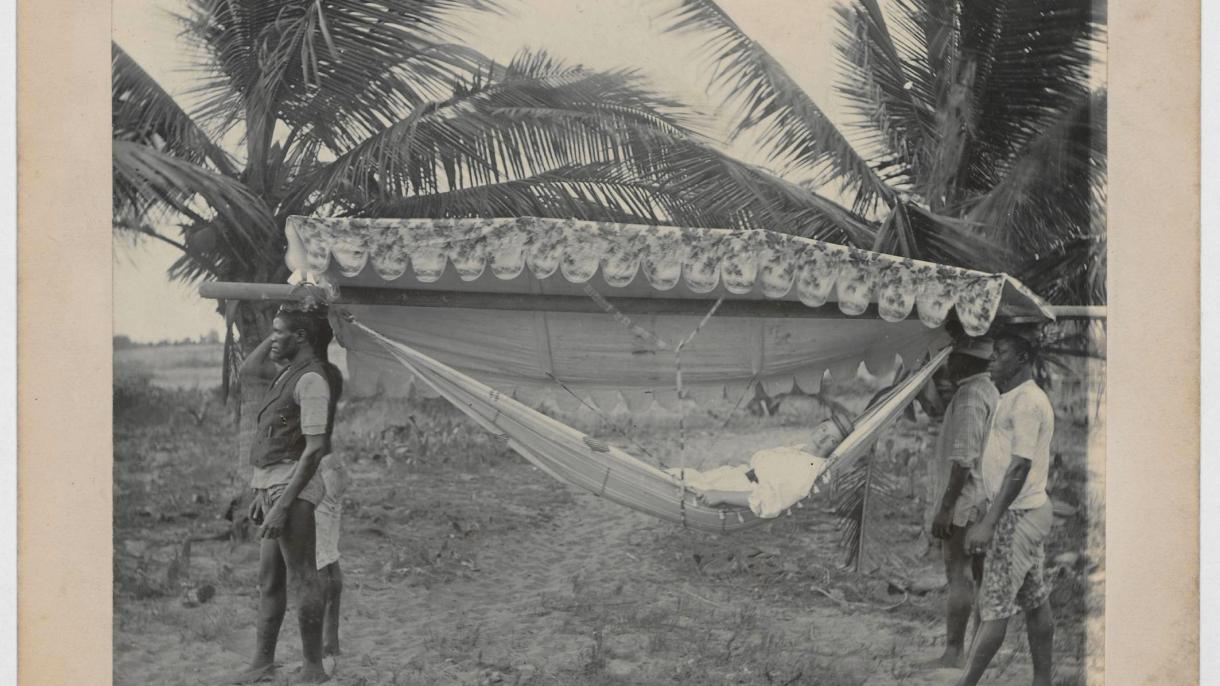
Zwischen 1884 und 1918 zählte das Deutsche Reich zu den großen europäischen Kolonialmächten. Es besaß seine größten Kolonien auf dem afrikanischen Kontinent, sowie das nordöstliche Neu Guinea und kleinere Besitztümer im Pazifik und in der Kiautschou-Bucht in China. Den Menschen in den ehemaligen Kolonien ist der Kolonialismus noch heute allgegenwärtig. Die Folgen reichen von immer noch bestehenden Staatsgrenzen bis zur Nationalsprache. Auch in Leipzig finden sich koloniale Spuren: im Stadtbild, in städtischen Institutionen wie dem Zoo und nicht zuletzt auch im Völkerkundemuseum, dessen Sammlungsobjekte zum großen Teil aus der Kolonialzeit stammen.
Dies sind sichtbare Spuren, die von der Vergangenheit in die Gegenwart weisen. Unzählige andere sind weniger sichtbar. Das koloniale Erbe zieht sich in Deutschland bis heute durch gesellschaftliche Strukturen und Institutionen und äußert sich in Vorstellungen und Umgangsweisen. Erst allmählich findet auch hierzulande eine öffentliche Auseinandersetzung mit dem Thema statt und weckt das allgemeine Interesse für postkoloniale Fragestellungen.
Die Veranstaltungsreihe möchte zum Verständnis beitragen, warum die Aufarbeitung dieser Geschichte für die Gegenwart so wichtig ist und welche Potentiale die postkoloniale Auseinandersetzung bietet. Sie wird Zusammenhänge und Beziehungsmuster sichtbar, Perspektiven nachvollziehbar und Stimmen hörbar machen.
____________________________________________
#2 Colonial Traces in Daily Life
Our guests:
Katharina Oguntoye, historian, author and activist, co-publisher of the book »Farbe bekennen. Afro-deutsche Frauen auf den Spuren ihrer Geschichte.« (1986); she leads the JOLIBA – Interkulturelles Netzwerk Berlin e.V., a non-profit intercultural networking group.
Sebastian Garbe is a doctoral student on current translocal solidarity movements from a decolonial perspective, at the Institute of Sociology at Gießen Justus Liebig University, He is active in the Initiative Frankfurt Postkolonial
Venue: Grassi Museum für Völkerkunde, Johannisplatz 5-11, Leipzig
The period of European colonialism ended when nearly all colonies became independent in the second half of the 20th century. Germany lost its colonies as early as 100 years ago. Still, post-colonial theorists and decolonial activists keep referring to a colonial continuity. How does this continuity manifest itself? Why do these structures and traces often remain invisible, and to whom do they become visible and palpable? The two speakers represent different approaches of visualization and discussion. Katharina Oguntoye is active in the Black Germans movement, while Sebastian Garbe contributes Latin American perspectives to the German-speaking post-colonial debate.
This series of events is a cooperation between the Grassi Museum für Völkerkunde and Weiterdenken, Heinrich-Böll-Stiftung Sachsen. Isabelle Reimann, ethnologist and active in political education, will moderate the panel discussion. Most recently, she worked as a lecturer for the post-colonialism/coloniality seminar at the Leipzig Institute of Ethnology.
About the series
Between 1884 and 1918, the German Reich counted among the big European colonial powers. Its largest colonies were on the African continent, complemented by North-East New Guinea and smaller properties in the Pacific and the Kiautschou Bay in China. Consequences range from national boundaries still existing today to official languages. Leipzig, too, features colonial traces, in municipal institutions such as the Zoo, as well as the Völkerkundemuseum (Museum of Ethnology ) itself, whose collection items mostly date from colonial times. These are visible traces pointing from the past into the present. Up to this day, the colonial heritage in Germany runs through social structures and institutions and becomes apparent in ideas and attitudes. Public discussion of the subject is beginning to evolve in this country and encourages a general interest in post-colonial issues. This series of events was designed to contribute to a better understanding of why coming to terms with this history is so important for the present, and which potentials post-colonial analysis offers. The series will help make correlations and relationship patterns visible, perspectives comprehensible, and voices audible.
__________________________________________
#2 Les traces coloniales dans le quotidien
Les invités:
Katharina Oguntoye, historienne, auteure et activiste du réseau interculturel JOLIBA à Berlin, est la co-editrice de l'ouvrage »Farbe bekennen. Afro-deutsche Frauen auf den Spuren ihrer Geschichte.« (1986).
Sebastian Garbe, doctorand à l'Institut de Sociologie de l'université Justus Liebig à Giessen. Sa thèse porte sur les mouvements contemporains de solidarité trans-locaux d'un point de vue post-colonial. Il est actif dans l'initiative Frankfurt Postkolonial.
Série de conférences de janvier à mars 2017 au musée GRASSI d'ethnologie de Leipzig, Johannisplatz 5-11
31 janvier 2017 ∙ 19 h ∙ Grande salle de conférences
La période du colonialisme européen s'est terminée en l'indépendance de presque toutes les colonies dans la deuxième partie du XXe siècle. L’Allemagne, elle, avait déjà perdu ses colonies en 1919. Malgré tout, les théoricien/ne/s et activistes de la décolonisation parlent d'une continuité coloniale. En quoi cette continuité s'exprime-t-elle? Pourquoi ces structures et traces restent-elles souvent invisibles et pour qui sont-elles justement très perceptibles? Les deux orateurs partent de points de vue différents: Katharina Oguntoye s'engage dans le mouvement des Afro-allemand/e/s et Sebastian Garbe apporte la perspective latino-americaine dans le débat allemand post-colonial.
La série est une coopération entre le musée Grassi d'ethnologie et la fondation Heinrich-Böll en Saxe.
Les tables rondes seront animées par Isabelle Reimann, ethnologue, lectrice à l'Institut d’Ethnologie de l'Université de Leipzig (séminaire sur le sujet du colonialisme/post-colonialisme) et active dans l'éducation politique.
Entre 1884 et 1918, l'Empire allemand figurait parmi les grandes puissances coloniales de l'Europe. Ses plus grandes colonies se trouvaient sur le continent africain, mais il régnait également sur la partie nord-est de la Nouvelle-Guinée ainsi que sur des plus petits territoires dans l'océan Pacifique et dans la Baie de Kiautschou en Chine. Pour les habitants des anciennes colonies, les effets du colonialisme restent omniprésents: les frontières toujours existantes et les langues officielles des états en témoignent. A Leipzig aussi, on trouve des traces du passé colonial: Dans l'architecture, dans des institutions municipales comme le jardin zoologique et bien sûr dans les collections du musée Grassi d'ethnologie qui datent pour la plupart de l'époque coloniale.
Voici les traces visibles où le passé touche notre présent, mais il restent également d'innombrables traces moins visibles. En Allemagne, l’héritage colonial reste ancré dans les structures et les institutions sociales, il s'exprime à travers des conceptions théoriques et des relations au sein de la société. Le débat public et l’intérêt général concernant des sujets post-coloniaux ne commencent que récemment à se manifester en Allemagne.
La série de conférences veut montrer en quoi l'étude de ces histoires reste pertinente. Quels sont les potentiels qu'offre le débat post-colonial? Quels liens et relations deviennent visibles, quelles voix et perspectives se font
Sur les pages internet suivantes, vous trouverez le programme de la série de conférences „(In)visibles?! Les traces du colonialisme dans les musées et la société“ en français: www.weiterdenken.de, www.mvl-grassimuseum.de
- Adresse
-
▶ Siehe Veranstaltungsbeschreibung
- Veranstalter*in
- Landesstiftung Sachsen (Weiterdenken)
- Teilnahmegebühren
- kostenfrei